Understanding Sales Compensation in a Product-Led Growth Environment
Sales compensation is more than just a paycheck; it is a strategic lever that directly influences behavior and outcomes. In traditional sales models, compensation is often tied solely to revenue or quota attainment, which works well in a transactional selling environment. However, Product-Led Growth (PLG) changes the dynamics entirely. In PLG models, the product drives adoption, and the sales team’s role shifts toward facilitating expansion, renewals, and higher-value deals rather than simply closing new business. This evolution means compensation plans must reward outcomes like product engagement, adoption rates, and customer expansion alongside revenue. Aligning incentives in this way ensures salespeople focus on the behaviors that truly impact long-term business growth. Without this alignment, teams may prioritize short-term wins at the expense of product adoption and retention. Metrics like product usage, customer success interactions, and upsell opportunities become just as critical as booking revenue in shaping compensation.
PLG environments also require a balance between quantitative and qualitative measures. While revenue is still important, measures of customer success—like user activation, engagement, and product adoption—are essential. Sales leaders need to understand that their teams are now part of a broader ecosystem where success is shared across product, sales, and customer success teams. Additionally, the timing of incentives becomes critical. Compensation tied solely to early-stage revenue may demotivate teams if the real value of the sale is realized months later through product expansion. By adapting compensation to reflect PLG realities, companies can drive behaviors that increase both revenue and product adoption.
Core Components of a PLG-Aligned Sales Compensation Plan
Designing a sales compensation plan for PLG requires understanding the interplay between base salary, variable pay, and the metrics that matter most. Unlike traditional plans, PLG compensation emphasizes not just closing deals but also driving meaningful product adoption and usage. A typical plan includes a guaranteed base salary, which provides financial stability, paired with a variable component tied to key outcomes like upsells, expansions, or retention. This ensures that salespeople are rewarded for contributing to both immediate and long-term growth.
In addition to standard revenue incentives, PLG compensation often incorporates adoption-based bonuses. For example, rewards might be tied to milestones like percentage of active users, product adoption rates across teams, or engagement levels for enterprise customers. Commission structures may differ between self-serve and enterprise accounts. Self-serve customers may generate smaller commissions per deal but higher volume, whereas enterprise deals focus more on expansion revenue and strategic engagement.
Performance metrics in PLG plans typically include:
- Product adoption and usage rates
- Expansion revenue and upsell success
- Net revenue retention (NRR)
- Customer satisfaction and retention metrics
- Cross-functional collaboration and alignment with customer success teams
By including these elements, companies ensure compensation supports the behaviors that generate sustainable growth rather than short-term revenue spikes.
Designing Compensation for Different Sales Roles in PLG
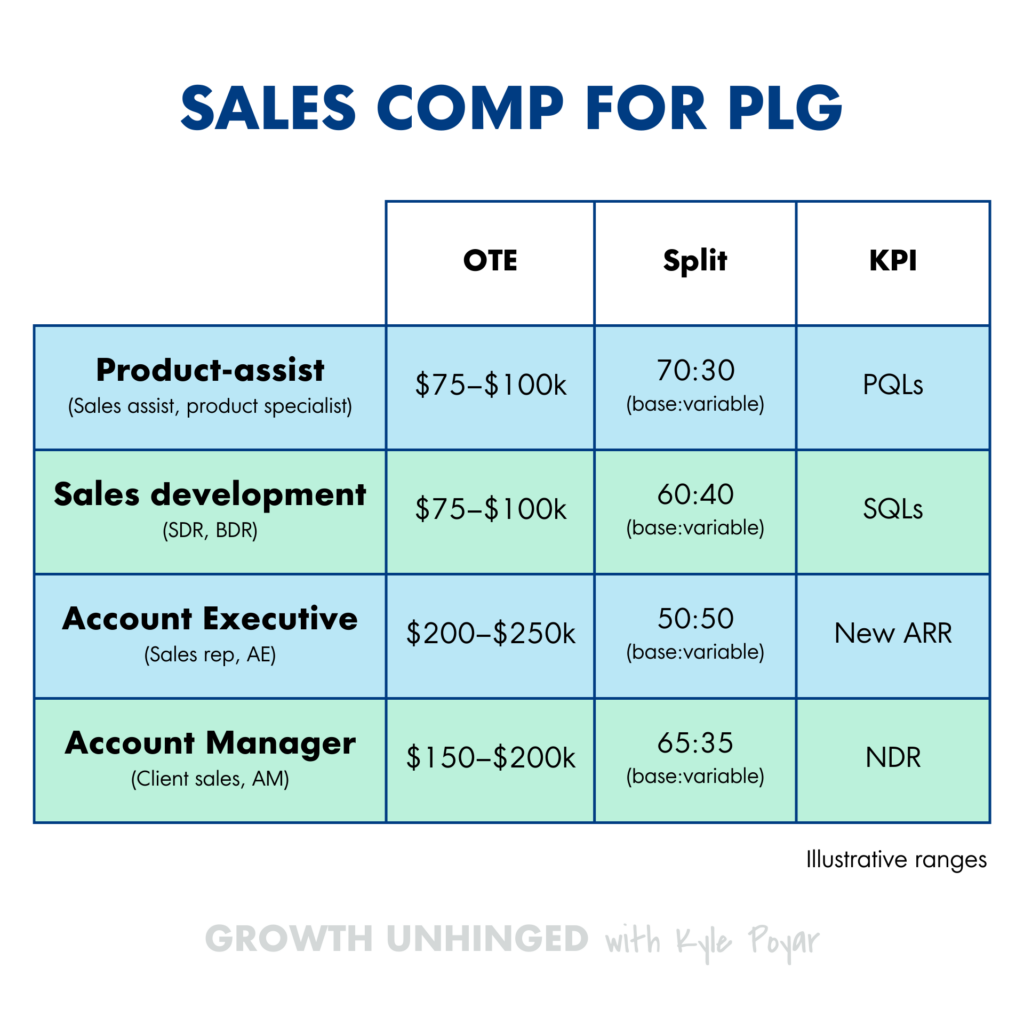
PLG requires careful segmentation of sales roles to ensure each team’s incentives align with the company’s growth objectives. Individual contributors such as SDRs and account executives often focus on driving product adoption in smaller accounts. Their compensation may include bonuses for onboarding new users or achieving specific usage metrics. Enterprise sales teams, on the other hand, are rewarded for expansion and upsell opportunities, with metrics tied to product adoption and revenue from existing accounts.
Customer success and renewal teams play a pivotal role in PLG environments. Their compensation should encourage proactive engagement, retention, and upsell opportunities based on product usage. Incentives that ignore adoption metrics risk creating misalignment between sales, success, and product teams. Properly structured plans balance rewards between acquiring new customers and maximizing existing account potential. Compensation must also motivate collaboration between teams so that product-led growth becomes a shared responsibility rather than siloed goals.
For example, a typical PLG sales team compensation plan may include:
- SDRs: bonuses tied to number of users activated and trial-to-paid conversion rates
- Account Executives: commissions based on expansion revenue and upsell performance
- Customer Success Managers: incentives based on adoption metrics, NRR, and product engagement
This approach ensures every role contributes to long-term growth while still rewarding individual performance.
Metrics and KPIs That Drive PLG Sales Compensation
In a PLG model, metrics go beyond closed deals. Sales compensation must reflect measurable behaviors that impact product adoption and expansion. Activation rates, engagement metrics, and adoption scores are key indicators that a customer is deriving value from the product. Expansion revenue and net revenue retention (NRR) further capture how well the sales team supports the product-led growth strategy. Customer Lifetime Value (CLV) also becomes an essential metric, as high adoption and retention drive long-term revenue.
Aligning KPIs across teams is essential to prevent misalignment and internal competition. For example, a sales rep may generate significant bookings but if the product is underutilized, renewal and expansion revenue may suffer. PLG-focused compensation incentivizes behaviors that support both initial sales and ongoing product adoption. Other important KPIs include:
- Product feature adoption
- Monthly active users (MAU) and usage trends
- Customer health scores
- Churn rates and retention metrics
- Expansion and upsell revenue
Using these metrics in compensation plans ensures that sales teams are rewarded for driving meaningful, long-term customer engagement rather than just transactional wins.
Challenges and Solutions in Implementing PLG Compensation Plans
Transitioning to PLG sales compensation is not without challenges. One common pitfall is overemphasizing revenue while neglecting product adoption. This can lead to misaligned behaviors and missed opportunities for expansion. Another challenge involves conflicts between sales and product teams when metrics or incentives overlap incorrectly. Transparency in compensation structure is critical to prevent confusion or disengagement.
Organizations must address these issues by clearly defining how compensation is calculated and which behaviors are rewarded. Technology can help by providing real-time insights into metrics like usage, adoption, and expansion potential. Regular reviews and adjustments ensure that the plan remains relevant as the product evolves and the market changes. Common solutions include:
- Balancing revenue and adoption incentives
- Clearly communicating plan structure and expectations
- Implementing dashboards for transparency
- Aligning cross-functional teams to shared goals
- Regularly reviewing and adjusting plans
By addressing these challenges proactively, companies can create a sales compensation plan that drives the desired PLG outcomes without creating friction between teams.
Iterating and Optimizing Compensation Over Time
PLG compensation is not static; it requires continuous iteration to remain effective. Companies must regularly review performance data to identify which incentives are driving the right behaviors. Feedback from sales teams provides insights into what motivates them and highlights any areas of misalignment. Data-driven adjustments help forecast outcomes and refine incentive structures.
As the product evolves and adoption patterns change, compensation plans must adapt. For example, early-stage PLG teams may need stronger incentives for initial adoption, while mature teams may focus more on expansion and retention. Iterating plans over time ensures alignment with business goals and supports sustainable growth. Best practices include:
- Conducting quarterly or semi-annual plan reviews
- Incorporating sales feedback to refine metrics
- Using adoption and engagement data to adjust incentive weightings
- Forecasting revenue and retention outcomes based on plan changes
- Ensuring transparency throughout iterations to maintain trust
By taking an iterative approach, companies can optimize their sales compensation for PLG without creating misalignment or dissatisfaction among sales teams.
Aligning Compensation With Overall Business Goals
A PLG-aligned sales compensation plan must reflect broader business objectives. Incentives should encourage behaviors that maximize customer value and drive retention, rather than simply increasing short-term bookings. Linking compensation to adoption and engagement ensures sales teams prioritize long-term growth and customer success.
Sales, customer success, and product teams need shared metrics that reinforce collaboration and mutual accountability. Compensation plans should reward cross-functional behaviors that improve product engagement and reduce churn. Additionally, plans should recognize that product-led growth success is often incremental, requiring patience and persistence from the sales team. Aligning incentives in this way creates a culture where long-term revenue growth and customer satisfaction are equally valued.
Key strategies include:
- Rewarding adoption and engagement alongside revenue
- Incorporating metrics that reflect long-term customer health
- Aligning sales incentives with product and customer success objectives
- Encouraging behaviors that improve product stickiness and reduce churn
- Continuously adjusting plan design to reflect changing company priorities
This alignment ensures that every dollar spent on sales compensation directly contributes to sustainable PLG success.
Frequently Asked Questions (FAQ)
1. What is PLG and why does it affect sales compensation?
PLG, or Product-Led Growth, prioritizes the product as the main driver of customer acquisition, adoption, and expansion. Sales compensation in PLG needs to reward outcomes like product engagement, adoption, and expansion, not just initial revenue.
2. How do you balance base salary and variable pay in a PLG model?
A strong PLG compensation plan balances stability with performance incentives. Base salary provides security, while variable pay rewards adoption, expansion, and retention metrics alongside revenue.
3. Which metrics should be prioritized in PLG-focused compensation?
Activation rates, product usage, customer retention, net revenue retention (NRR), and expansion revenue are critical. Aligning these with sales roles ensures compensation supports long-term business growth.
4. How can compensation encourage cross-team collaboration?
By linking incentives to shared metrics, such as product adoption or upsell performance, sales, product, and customer success teams work toward common goals rather than competing silos.
5. What are common mistakes when transitioning from traditional to PLG sales plans?
Focusing solely on revenue, ignoring adoption metrics, or creating unclear incentive structures can undermine PLG objectives. Transparency, metric alignment, and iterative adjustments help prevent these issues.
6. How often should PLG sales compensation plans be reviewed or updated?
Quarterly or semi-annual reviews are recommended. Regular updates ensure alignment with evolving product strategies, market conditions, and team feedback.
Takeaway
Aligning sales compensation with Product-Led Growth is a strategic opportunity to drive sustainable growth. By emphasizing adoption, engagement, and retention alongside revenue, companies can incentivize behaviors that improve customer outcomes and long-term business value. Iterative adjustments, transparent metrics, and cross-functional alignment are essential to making PLG compensation plans successful. When done right, compensation becomes more than just a reward—it becomes a tool to accelerate product-led expansion, retention, and revenue growth.Read More: https://openviewpartners.com/blog/your-guide-to-sales-compensation-plg/